
Low frequency is the foundation of immersive sound field construction for all commercial and professional venues. Whether for bar live performances, KTV entertainment, banquet hall events or outdoor stage shows, excellent bass performance can enrich sound layers, enhance scene atmosphere and perfect overall audio expression. Many venue operators and audio engineers often face confusion in equipment selection: unable to distinguish the applicable scenarios of active subwoofer and passive subwoofer, resulting in insufficient bass depth, muddy low frequency and unbalanced sound field, which greatly reduces the performance of the entire High quality audio system. As professional and reliable subwoofer manufacturers, TRS Audio provides diversified low-frequency equipment and systematic matching solutions, helping users select the most suitable TRS Subwoofer for different venues.
The essential difference between active subwoofer and passive subwoofer lies in internal structure and system matching logic. The built-in power amplifier module of active subwoofer realizes plug-and-play use, without complicated external power equipment. It features simple wiring, convenient installation and stable preset tuning, perfectly matching small and medium-sized fixed venues. In contrast, passive subwoofer has no built-in drive unit and needs professional power support. It can undertake high-load power output and is easier to stack and expand sound pressure, making it the preferred core equipment for large venues and high-standard performance scenarios. All TRS low-frequency products belong to High quality speaker series, with rigorous industrial calibration to ensure pure and powerful low-frequency restoration.
For small and medium-sized scenarios such as private KTV rooms, folk bars, small conference halls and home theaters, active subwoofer is the most cost-effective choice to build a High quality audio system. It can work stably with TRS Audio Mixer for signal mixing and fine tuning, cooperating with TRS Handheld Wireless Microphone to complete human voice pickup. With the precise optimization of TRS Processor, the system intelligently adjusts low-frequency gain, suppresses standing wave resonance and eliminates bass turbidity in narrow spaces. The whole matching scheme is simple and efficient, with low later maintenance cost, which can perfectly meet the daily entertainment and small performance needs of small venues.
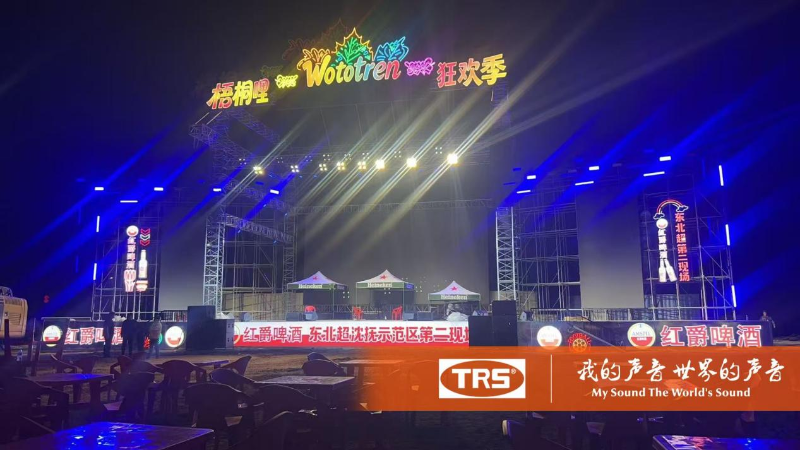
When it comes to large-scale professional venues including outdoor stages, large banquet halls, live houses and commercial performance sites, high power subwoofer and passive subwoofer become the indispensable core configuration. As high-performance subwoofer manufacturers, TRS’s passive subwoofer adopt reinforced cabinet structure and high-power voice coil design, with strong low-frequency diving ability and super large sound pressure coverage. This TRS Professional Subwoofer must be matched with TRS Professional Amplifier. The high-quality professional amplifier provides sufficient power reserve, stably drives multiple groups of passive subwoofer, and realizes full-space uniform low-frequency coverage, avoiding local insufficient bass or excessive vibration.
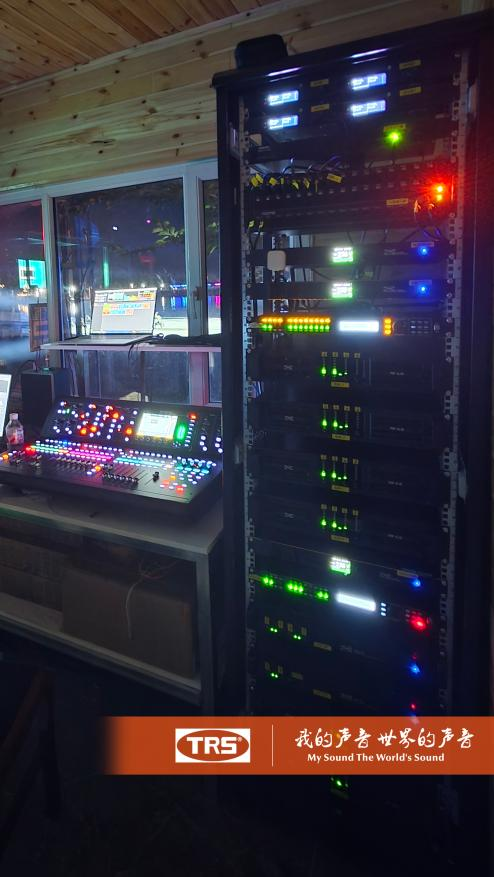
A complete professional low-frequency audio system also needs standardized auxiliary equipment to ensure stable operation. The TRS Power Sequencer uniformly manages the power supply of amplifiers, processors and subwoofer, effectively preventing current impact and equipment damage caused by disorderly startup and shutdown, and greatly improving the service life of the entire High quality audio system. Meanwhile, the TRS Processor acts as the system tuning core, completing frequency division processing, phase correction, delay calibration and dynamic low-frequency adjustment for High quality speaker and subwoofer equipment, realizing seamless docking between full-frequency sound and low-frequency sound.
In terms of practical application advantages,active subwoofer is more suitable for fixed small and medium venues and mobile temporary activities with simple deployment, highlighting convenience and stability. The passive subwoofer and high power subwoofer are oriented to high-standard engineering projects, supporting multi-unit superposition and flexible sound field expansion, and can cope with long-term high-load operation of large performances. Cooperated with TRS’s complete set of audio equipment such as mixer, microphone, amplifier and processor, it can create a hierarchical, clear and shocking professional sound field.
To sum up, there is no absolute superiority between active and passive subwoofer, only scenario adaptation. Venue owners and engineers can select targeted TRS Subwoofer according to site size and usage demand. As professional subwoofer manufacturers, TRS Audios rely on High quality speaker manufacturing technology and mature system matching experience, with the support of TRS Professional Amplifier, TRS Processor, TRS Audio Mixer, TRS Handheld Wireless Microphone and TRS Power Sequencer, to build exclusive high-quality low-frequency solutions for all kinds of venues, realizing perfect audio presentation of every professional sound reinforcement project.
Post time: Jul-13-2026