
In the Sound Field, many customers fall into misunderstandings when purchasing professional speakers. They blindly pursue high power parameters and large-size units, believing that higher parameters mean better sound quality. In fact, parameters are merely cold data. The actual listening experience is determined by equipment adaptability, acoustic structure and system compatibility. To select high-quality speaker equipment, you should not only focus on paper parameters. Master these three core purchasing points to avoid industry traps and easily build a stable, pure and pleasant professional audio system.
First, prioritize the acoustic structure of speakers, since hardware materials determine the lower limit of sound quality. Many low-cost speakers have falsely marked parameters, with thin cabinet plates and rough internal structures, which easily cause cabinet resonance, muffled vocals and muddy low frequencies. Manufactured with high-density plates, scientific cavity structures and high-quality speaker units, high-quality speaker equipment can effectively reduce noise and suppress resonance to restore pure and original sound, whether for main professional speakers or subwoofer. Especially for subwoofer, an excellent cavity structure delivers tight, powerful and non-disturbing low frequencies, adding rich low-frequency texture to the entire audio system — a hardware advantage that pure parameters cannot reflect.
Second, pay attention to power amplifier matching and distinguish the adaptation logic between professional power amplifiers and digital power amplifiers. Even high-quality speakers will suffer distortion, sound cracking and insufficient dynamics if the amplifier lacks enough thrust or impedance matching. Professional power amplifiers provide stable power and strong explosive power, suitable for long-term commercial use in large venues; digital power amplifiers feature compact size, high efficiency, energy saving and excellent temperature control, making them ideal for small and medium-sized spaces. When purchasing professional speakers, you must select a matched amplifier according to the speaker’s power and impedance to ensure sufficient and stable thrust, maximize the acoustic performance of high-quality speaker equipment, and avoid the waste of mismatched configurations.
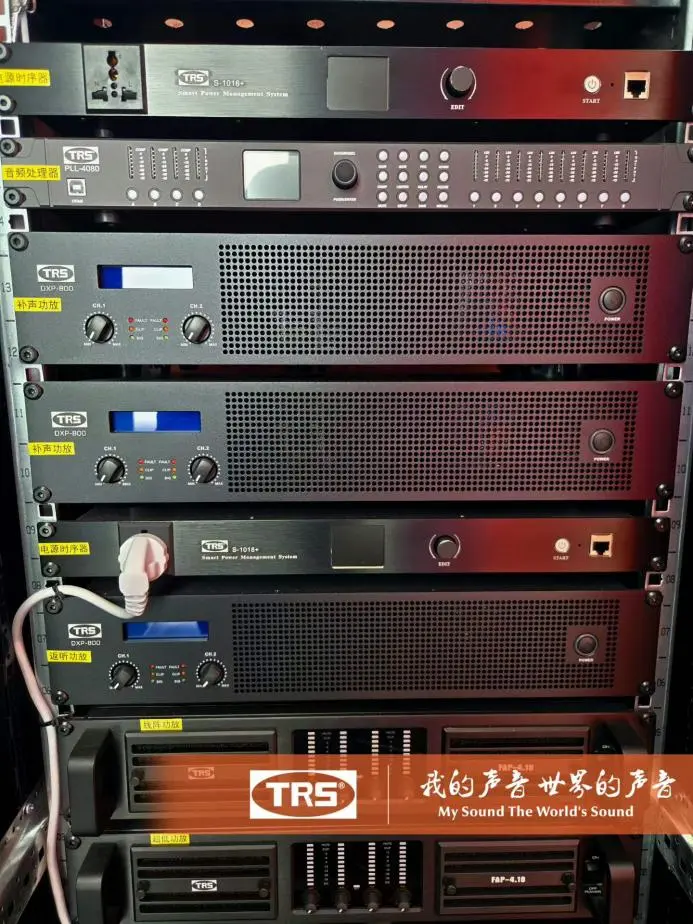
Third, consider the overall system compatibility, as peripheral equipment determines the final sounds performance. A mature professional audio system requires the coordinated operation of processors, power sequencers, audio mixers and microphones, instead of relying on a single speaker. As the brain of the audio system, the processor undertakes frequency division, delay and phase adjustment to optimize sound field defects and realize smooth transition between vocals and instrumental sounds. The power sequencer starts and shuts down equipment in order, preventing instantaneous current impact to protect professional power amplifiers and high-quality speakers and extend service life. The Audio Mixer precisely adjusts tone and volume, and optimizes vocal clarity while suppressing noise when matched with wireless handheld microphones. Reasonable collocation of peripheral equipment integrates subwoofer, professional speakers and amplifiers to achieve a uniform sound field and distinct sound layers.
Many users blindly pursue exaggerated parameters while ignoring the acoustic environment, equipment matching and system compatibility, resulting in stacked equipment, poor sound quality and continuous howling. Some speakers have attractive parameters but suffer from obvious howling, muddy low frequencies and thin vocals when using microphones. The fundamental reason is the neglect of acoustic structure, amplifier matching and system adaptation. A truly professional audio solution emphasizes scientific collocation rather than falsely marked parameters.
In conclusion, sound quality never depends on parameter stacking in the acoustic field. Do not be misled by superficial data when purchasing professional speakers. Focus on the speaker structure, amplifier adaptability and system compatibility. Equip with high-quality subwoofer, professional power amplifiers, digital power amplifiers, processors, power sequencers, audio mixers and microphones to build a well-structured and finely debugged high-quality speaker system. Stay away from parameter traps and choose equipment rationally. Professional speakers can restore pure and authentic sound, adapting to diverse scenarios such as KTV, banquet halls, meeting rooms and outdoor performances, and create a stable, transparent and high-quality professional sound field.
Post time: May-08-2026