
Elevate Library Event Halls with TRS Line Array Speakers & Stage Monitor Speakers
Modern libraries have evolved beyond quiet reading rooms into multi-purpose cultural venues, hosting author lectures, reading salons, academic seminars, children’s drama shows, poetry recitals, documentary screenings and community concerts. For these on-stage activities, ordinary ceiling speakers often fail to deliver consistent, high-fidelity sound for audiences, and speakers or hosts cannot clearly hear their own voice on the platform. This acoustic bottleneck can greatly reduce the quality of library events and weaken the patron experience. This is why TRS Audio offers a professional sound reinforcement solution built around TRS line array speakers and TRS stage monitor speakers, specially designed for library lecture halls and multi-function auditoriums. Combined with TRS DSP audio processors, TRS power amplifiers and TRS wireless microphone systems, this integrated setup solves core sound challenges for library events while respecting the library’s overall quiet environment.
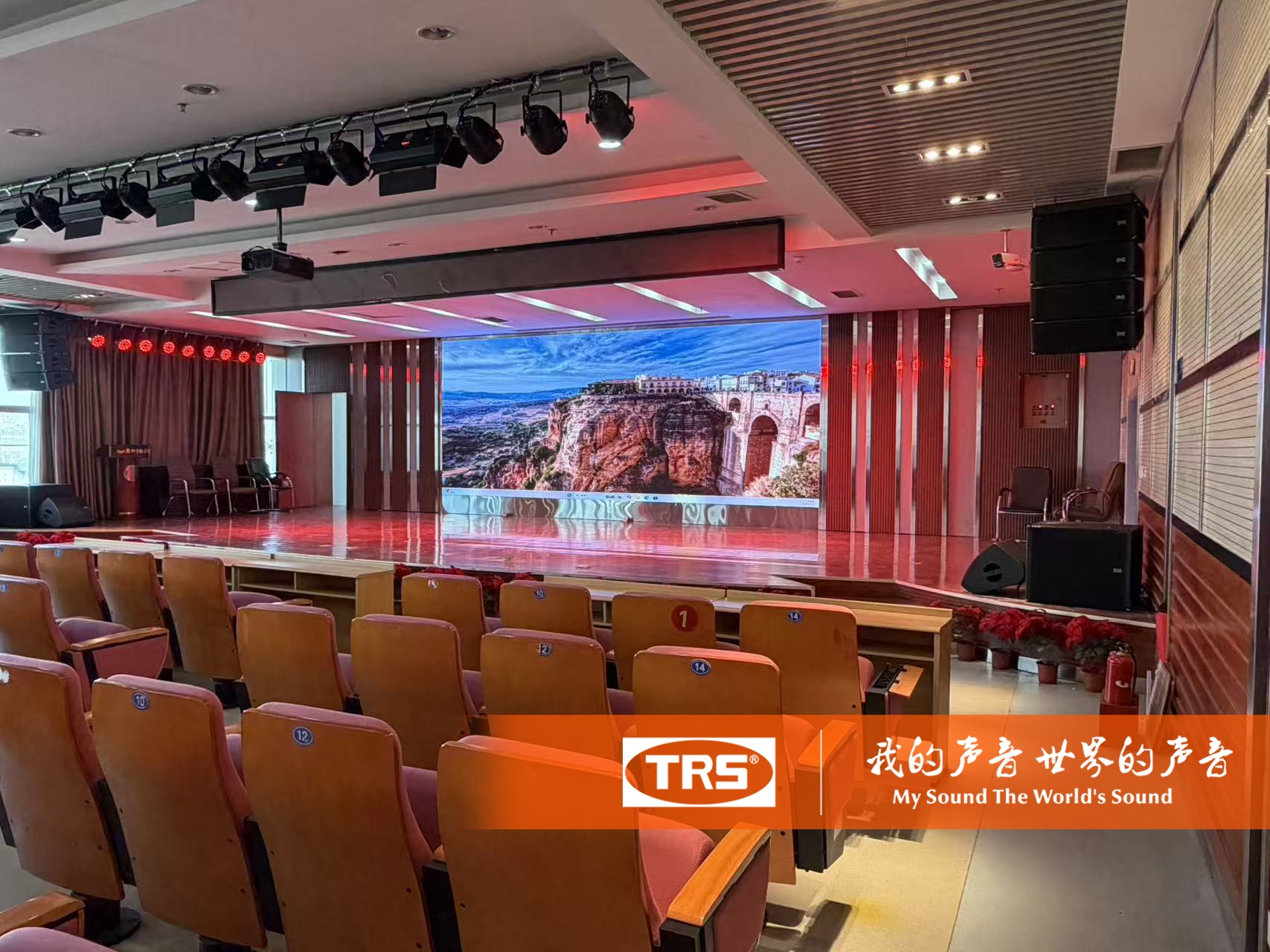
TRS line array speakers serve as the main sound reinforcement core for library multi-function halls. Unlike conventional point-source loudspeakers, the modular line array design forms a coherent sound wavefront, achieving controlled direct and long-throw sound projection. In high-ceiling library auditoriums with hard reflective walls and large audience areas, uniform sound coverage is hard to achieve with regular speakers. Uneven sound pressure leads to booming sound in the front rows and weak, muffled audio at the back. Each module of TRS line array speakers can be precisely angled and arranged by audio engineers, so sound energy is focused exactly on the audience seating area instead of spilling into adjacent quiet reading zones. This feature is critical for libraries: it keeps the lecture hall sound powerful and clear, while minimizing sound leakage to disturb readers in nearby reading rooms. The system delivers outstanding speech intelligibility for speeches and vocals, and rich frequency response for musical performances, satisfying diversified educational outreach activities held by the library.
A complete professional sound reinforcement system cannot rely only on main line array speakers. TRS stage monitor speakers, also known as fold back monitors, play an irreplaceable role on the stage. Hosts, speakers and performers cannot hear their own voice or accompaniment from the main line array, which travels toward the audience. Without dedicated stage monitors, presenters tend to over speak, lose pitch, miss cues and struggle to adjust their tone. TRS stage monitor speakers adopt a wedge-shaped low-profile structure, placed on the stage floor facing the performers. They receive independent monitor mixes from the TRS DSP audio processor, separating the monitor signal from the main audience signal. This means performers can hear a clear, customized mix of vocals and background music in real time, independent of what the audience hears. It effectively reduces acoustic feedback, stabilizes on-site performance quality and greatly simplifies the work of sound operators. For library events that mix speech, music and interactive links, TRS stage monitor speakers are essential equipment to guarantee smooth presentation.
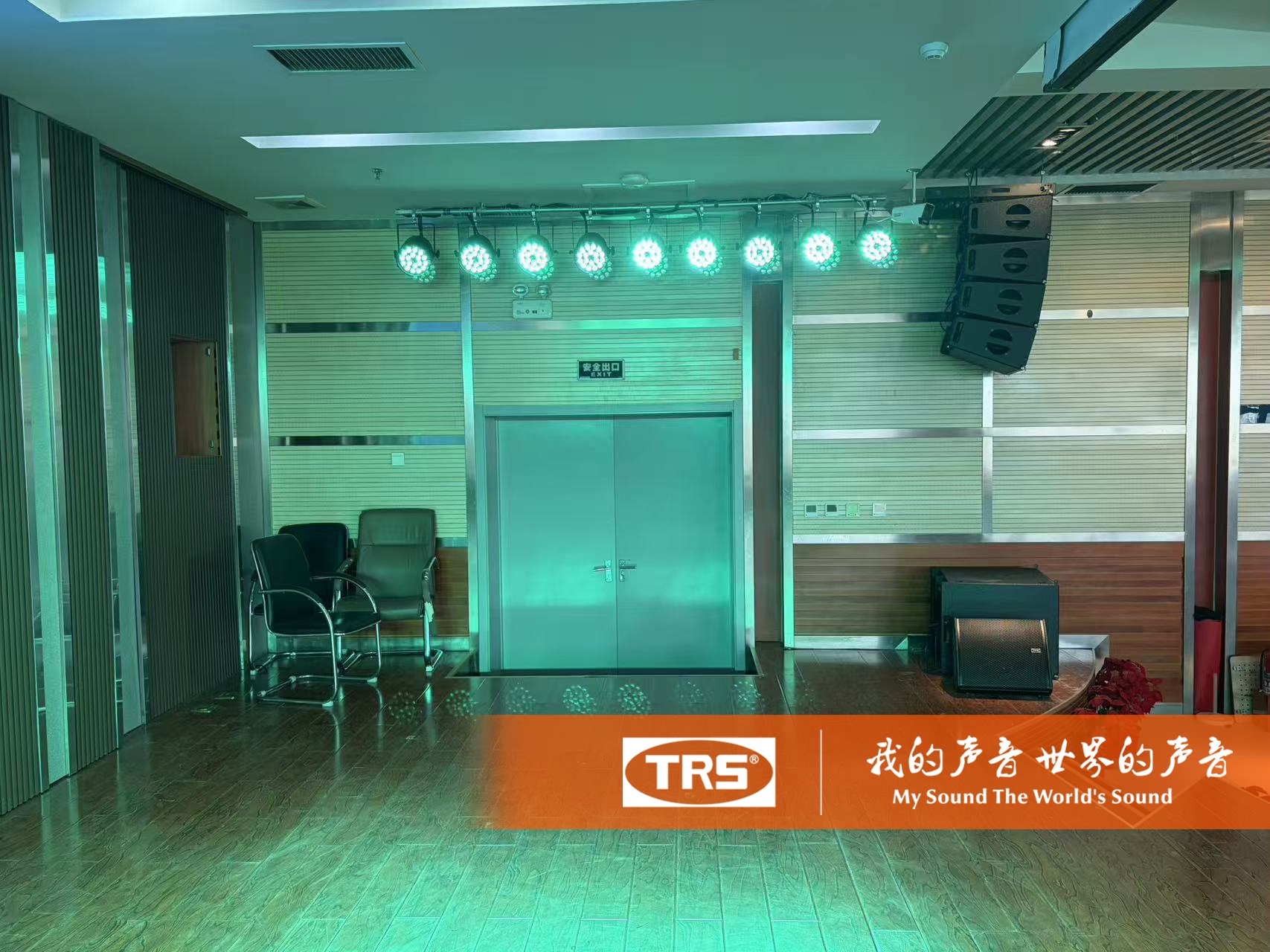
The whole TRS sound reinforcement system supports flexible multi-channel audio routing and independent mix control. The TRS DSP audio processor acts as the brain of the system, supporting parametric equalization, delay adjustment, high-pass and low-pass filtering, noise gate and feedback suppression. Our audio engineers carry out on-site acoustic testing before configuration, measuring reverberation time, standing wave and reflection characteristics of the library auditorium. Then they tune each frequency band, calibrate the delay time between TRS line array speakers and TRS stage monitor speakers, eliminate phase offset and optimize sound field consistency. The system can also integrate with mixers, laptops, media players and projectors to realize full AV integration, convenient for PPT sharing, video playback and live streaming during library seminars.
Another key advantage of the TRS solution is scalability. Many libraries plan to expand event functions gradually. The TRS line array speakers adopt a modular design. You can increase or reduce the number of array modules according to audience capacity, and add TRS subwoofer for music activities when needed. Extra TRS stage monitor speakers can be added for larger stages or multi-speaker events. The core DSP and amplifier host can remain unchanged, bringing excellent cost performance for library renovation and phased upgrading. When not hosting events, the system can be muted completely or switched to low-volume background playback mode, so it will not conflict with the library’s quiet positioning.
Many library managers mistakenly believe that line array and monitor systems are only for large concert venues. In fact, medium-sized library lecture halls are typical application scenarios for this matched sound reinforcement combination. Ordinary broadcast speakers can only meet simple announcement needs, but they cannot reproduce layered sound for lectures and performances. Without stage monitors, even well-prepared sharing sessions may sound stiff and unstable. A matched set of TRS line array speakers and TRS stage monitor speakers builds a dedicated professional sound field for library events, separating the event sound zone from quiet reading zones, balancing vitality and tranquility.
Post time: Nov-12-2026