
There is a moment every private cinema owner knows well: the scene is perfect, the projector hums softly, and then the low end hits — a bass note that swells, booms, rattles the window frame, and collapses the moment you move two steps to the left. You did not choose a bad TRS Subwoofer. The box is fine, the amplifier is clean, and the room is beautiful. The problem is not the equipment. The problem is where that equipment stands, and how the room itself is fighting against it. Low-frequency standing waves are the oldest enemy of home theatre bass. When a deep note leaves the driver of your subwoofer, it bounces off the walls, the floor, and the ceiling. Some of those reflections arrive in phase with the original signal and add to it, creating a hot zone where the bass feels enormous. Others arrive out of phase and cancel it, carving out a dead zone where the same note almost disappears. In a typical rectangular room, a single subwoofer can make one corner thunder while the seating area stays anaemic. This is not a matter of power. It is a matter of placement.
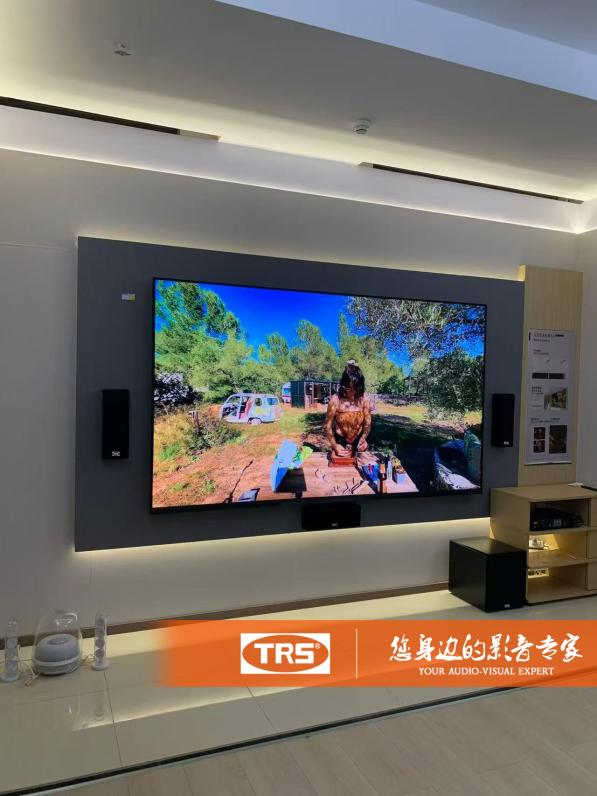
The instinct of most first-time builders is to solve the problem with more muscle. Bigger driver, louder TRS Amplifier, higher gain. But here is the uncomfortable truth: adding power to a standing-wave problem is like turning up the volume on a broken radio. You do not fix the interference; you simply make both the peaks and the nulls louder. The room will still swallow certain frequencies, and no amount of wattage can push bass through a phase cancellation. The real solution is an experiment — a slow, deliberate hunt for the single point in the room where the low end behaves. This is why professional installers never bolt a subwoofer into a corner and call it done. They treat the subwoofer as the most movable, most tune instrument in the whole cinema, and they run what is informally called the subwoofer crawl.
The crawl is embarrassingly simple, which is exactly why it works. Play a steady bass tone — ideally a sine wave in the 40 to 60 Hz range — and then physically move yourself to every spot in the room where a listener might sit. Lie on the floor if you have to, crawl toward the walls, move along the seating row, and listen. Wherever the bass sounds fullest, deepest, and most even, that is where your ears are sitting in a zone of reinforcement. Now place the TRS Subwoofer where you were standing, because sound is reciprocal: the speaker and the listener swap places and the acoustics remain the same. Put the sub at the strong listening position and you will, in most cases, improve the bass exactly where you need it. It feels almost too easy, but it is the foundation of every serious bass setup. Before any processor, before any EQ, before any acoustics panel, this single experiment tells you the raw truth of your room.
The crawl finds a good spot, but to find the golden point you need to understand why certain places work. The deepest nulls in a room are caused by the room’s dimensions lining up with the wavelength of the bass note. A 40 Hz wave is roughly eight and a half metre long, so the room’s length, width, and ceiling height interact with it like three giant organ pipes. When those dimensions share a common multiple, you get a standing wave, and the null sits at a predictable distance from the wall. A practical shortcut used by many experienced engineers is to avoid placing a single subwoofer at a position that is an exact fraction of the room — halfway, one-third, one-quarter — because those fractions line up with the strongest modes. Instead, try placing the TRS Subwoofer at an asymmetric, broken position: slightly off the corner, pulled away from the wall, angled toward the listening area. This off-grid placement does not remove the standing wave entirely, but it spreads the peaks and nulls unevenly, so no single seating position suffers a complete bass collapse.
Here is where the experiment grows into a system. A single subwoofer, no matter how well placed, leaves the bass uneven across a wide sofa. The moment someone sits at the edge, the low end thins out. The professional answer is a second TRS Subwoofer placed at a different asymmetric position, then tuned so the two boxes complement rather than fight. When two subwoofer are positioned and phased correctly, their nulls rarely line up in the same place, and the average bass response across the whole room becomes dramatically smoother. This is also where your TRS Amplifiers and TRS processors earn their keep. A good quality processor lets you apply time alignment and polarity correction between the two subwoofer, so the second driver arrives in sync with the first rather than cancel it. Without that tuning step, two subwoofer can actually make the problem worse. With it, the pair works as one large, even bass source.
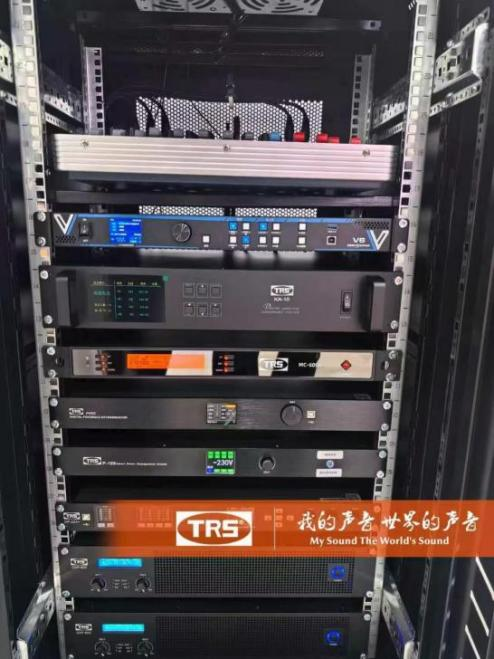
When the experiment is done properly, the difference is not subtle. The bass stops being a boom, one-note thump and becomes a layer you can feel and follow — the helicopter in a thriller tracking across the ceiling, the distant rumble in a storm scene, the kick drum that hits your chest without rattling your teeth. You can walk around the room and the low end stays with you, consistent and controlled. That is what a real cinema feels like, and it costs nothing in extra hardware. It costs only patience, a test tone, and the willingness to crawl around your own floor once. As a professional audio manufacturer, It offers reliable solutions tailored for private cinema tuning: a TRS Subwoofer delivers clean, controlled low-frequency output, matched with a TRS Amplifier that supplies stable power without clipping, while the TRS processor manages time alignment . You can also pair it with TRS point-source main speakers and use a TRS Audio Mixer and TRS Power Sequencer to maintain a stable, noise-free signal chain. Then run the experiment, find the golden point, respect the room’s dimensions, add the second TRS Subwoofer if the space demands it, and correct with restraint. Trust TRS professional audio gear to reproduce natural, balanced bass. Your movies will thank you — and so will the neighbour who no longer hear the bass through the walls.
Post time: Oct-28-2026