
How Crossovers Shape Speaker Sound Quality: The Magician Hidden Inside The Speaker Cabinet
The crossover is a component that is easily overlooked by audio engineers and equipment buyers. When selecting loudspeakers, most customers tend to focus on driver size, power specifications and cabinet materials, yet they seldom pay attention to the inconspicuous crossover assembly hidden inside the enclosure. Nevertheless, this internal component acts as the magician behind sound performance. It directly determines whether tweeters, mid-range drivers and woofers can perform their respective roles properly. It also explains why speakers fitted with identical speaker drivers can deliver drastically different sound outputs.
Simply put, the core function of a crossover is to split the full-range audio signal transmitted from the amplifier in a scientific manner. It routes high-frequency signals to tweeter units, mid-band signals to mid-range drivers, and low-frequency signals to subwoofer units. Without a crossover, full-band signals would flood every driver simultaneously. Tweeters would be forced to handle heavy low-frequency signals and become highly vulnerable to burn-out. Woofers would reproduce high-frequency content, resulting in harsh and muddled audio, and the layering of the entire sound field would collapse. Even premium-grade speaker drivers cannot deliver their true potential without well-tuned crossovers.
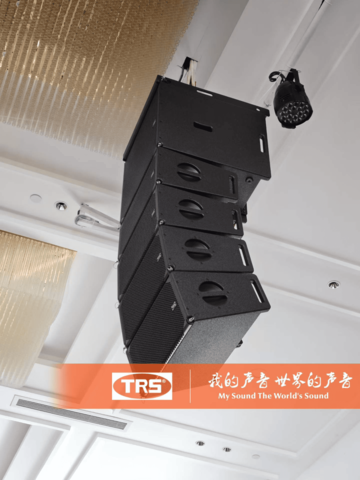
Crossover tuning logic varies significantly across line array speakers, stage monitor speakers, conference column speakers and outdoor waterproof speakers.
For line array speakers designed for long-distance even sound projection, crossovers must maintain tight phase coherence. This prevents frequency dips when multiple cabinets are stacked, so audiences both near and far receive balanced tonal performance. For stage monitor speakers, priority is given to human-voice mid-range reproduction. The crossover enhances vocal bands so performers can clearly hear their own singing, while suppressing excessive low-frequency energy to reduce the risk of stage feedback. KTV speakers crossovers balance vocal performance and backing music, delivering crisp non-piercing highs and rich non-muddy bass for extended karaoke sessions. Conference column speakers mainly handle speech reproduction; their crossovers filter redundant high and low frequencies to ensure articulate and intelligible voice output. For outdoor waterproof speakers, crossover components receive extra moisture-proof treatment to resist component degradation caused by humidity and temperature fluctuations in open-air environments.
Poor-quality crossovers trigger many common on-site engineering troubles. Misaligned hand-over points between high and low bands create audible gaps in sound perception. Unbalanced phase handling causes partial frequency cancellation, so users get surprisingly low volume even with sufficient power input. Inferior electronic parts generate sharp distortion under high dynamic output, bringing scratchy treble and loose, weak bass at high volume. Many projects feature impressive-looking data parameters, yet produce disappointing real-world sound. Very often, the root cause lies within substandard crossovers.
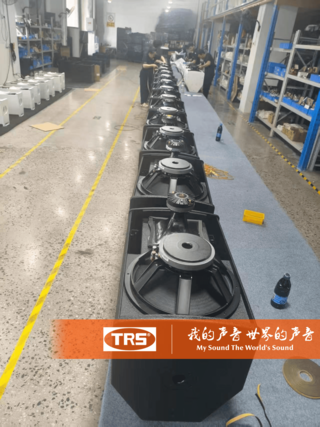
A high-performance crossover does far more than simple frequency splitting. It also manages phase alignment, impedance compensation and sufficient power headroom. The selection of capacitors and resistors, alongside circuit board layout, all exert tangible influence over final listening results. Professional crossover tuning produces smooth, non-harsh treble, full-bodied mid-range and tight, well-defined bass, with seamless transition across frequency bands without disjointed colouration. With the same set of speaker drivers, a refined crossover can greatly upgrade loudspeaker performance in resolution, dynamic response and vocal reproduction.
From the perspective of complete audio system engineering, crossovers work in coordination with peripheral hardware. Audio signals amplified by the TRS Professional Amplifier are precisely distributed to individual drivers by the built-in speaker crossover. Meanwhile, the TRS Professional Processor takes charge of system-level external tuning. Internal speaker crossovers and external digital processors complement each other. The processor handles overall system balancing, while the crossover manages frequency cooperation among drivers inside each cabinet. Only through such collaboration can the whole audio system reach its optimal performance.
Numerous project clients chase large-size drivers and high power figures while ignoring the critical role of crossovers. When shopping for subwoofer, line array speakers, KTV speakers or conference column speakers, specifications on paper are not the only reference point. The internal crossover solution deserves thorough evaluation. A competent loudspeaker is built by the synergy of cabinet structure, speaker drivers and crossover network. As the sound magician concealed inside the cabinet, the crossover quietly completes frequency allocation and phase calibration, enabling every transducer to fulfil its designated task and ultimately deliver clean, balanced and expressive sound.
Post time: Sep-09-2026