
Many people only focus on the grade of equipment in sound engineering and blindly purchase high-end devices, falling into the misconception that higher-priced equipment delivers better sound quality. However, they overlook the most critical links: installation layout and on-site commissioning. In the acoustic field, industry practitioners adhere to a fundamental principle: the hardware defines the upper limit of sound quality, while installation layout determines the lower limit. Even with top-tier high-quality sound systems, non-standard installation, unreasonable layout and inadequate commissioning may lead to common problems such as muffled sound, sound field discontinuity, unbalanced volume, and frequent microphone howling. For scenarios including business conferences, artistic performances, hotel banquet halls and outdoor activities, a scientifically designed layout for nt is essential to build a clear, layered and professional sound field. Reprofessional audio equipmeasonable matching of complete audio equipment can restore authentic original sound and deliver a comfortable auditory experience.
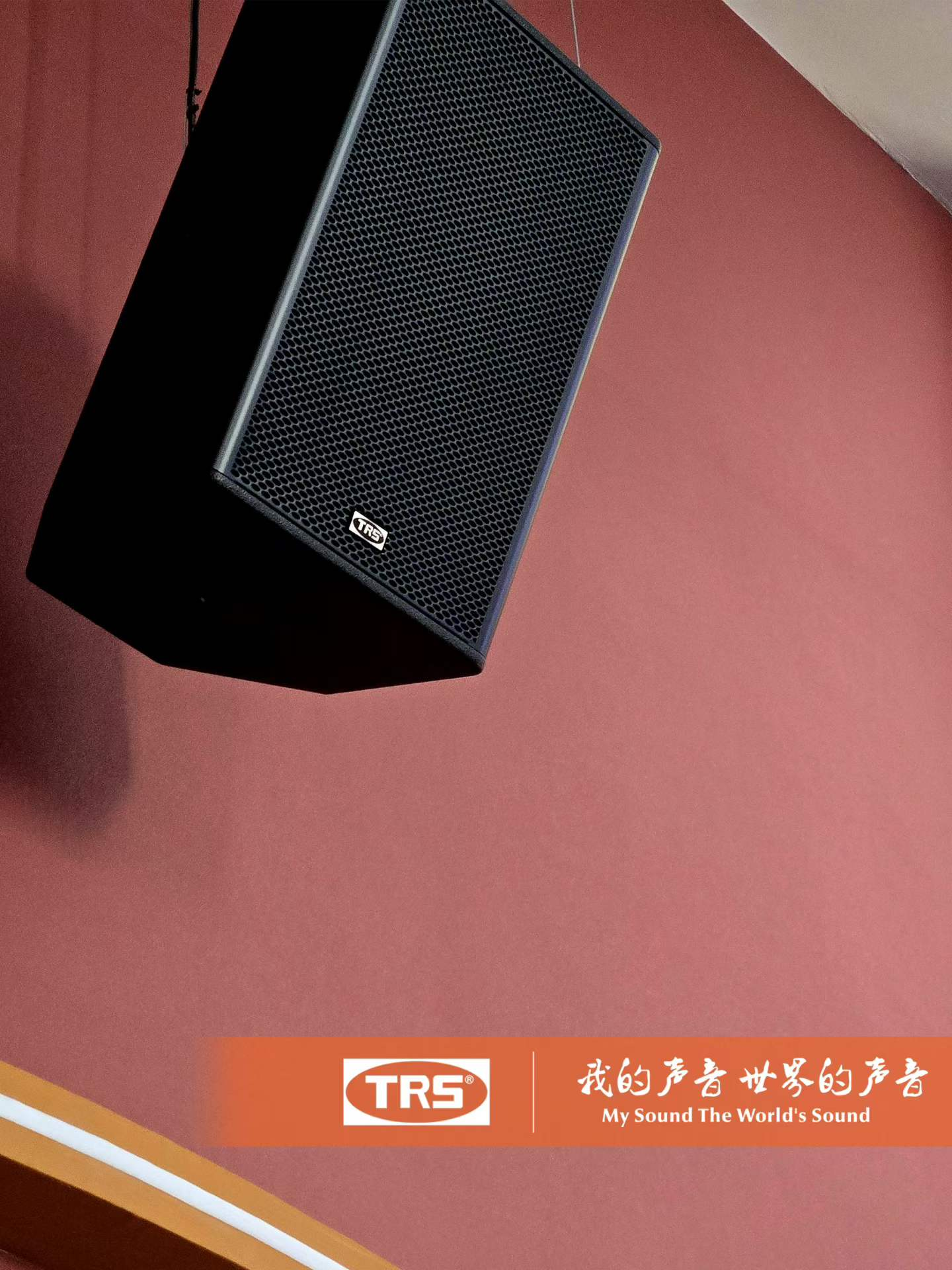
The scientific placement of speakers serves as the premise of high-quality sound. Poor sound quality in most venues does not stem from inferior sound equipment, but from improper installation positions, heights and projection angles. In engineering construction, main professional speakers shall be positioned according to the venue area, floor height and decoration materials. The sound projection angles need precise adjustment to avoid sound reflection and superposition caused by walls and ceilings, eliminating echoes, reverberation and noise. For stage performances, monitor speakers are indispensable. Performers and speakers can monitor their own vocals and accompaniment in real time through monitor speakers, preventing off-pitch sounds and rhythm disorders to stabilize the stage performance. Only by scientifically arranging speaker positions and optimizing sound emission angles can a dead-zone-free sound coverage be realized, ensuring balanced and pleasant hearing experience for every corner of the venue.
A stable and complete sound reinforcement system relies on the coordination of full sets of professional hardware. In the sound collection stage, microphones are core devices for sound capture. Among them, wireless handheld microphones are widely used in commercial events and stage performances due to flexible operation, free movement, sensitive sound pickup and strong anti-interference ability. High-quality microphones can accurately capture vocal details and effectively filter ambient noise to ensure pure and clear sound sources. Back-end power and control equipment form the backbone of the entire sound system. Professional power amplifiers provide continuous and sufficient power for speakers, balancing sound pressure and ensuring distortion-free sound even at high volumes. Audio processors adjust sound field delay, phase and frequency parameters to correct acoustic defects and optimize sound connection between multiple speakers. Power sequencers standardize the startup and shutdown sequence of equipment, avoiding instantaneous current impact to protect precision devices such as power amplifiers and speakers, and greatly extending the service life of the entire system.
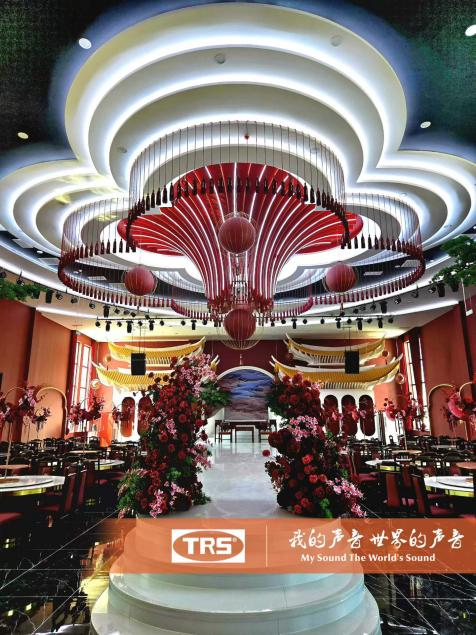
Professional debugging equipment targets and solves common on-site sound quality problems. In practice, building structures, wall materials and space openness will interfere with sound quality, and hardware alone cannot optimize the sound field, which requires auxiliary calibration by professional acoustic debugging equipment. Equalizers finely adjust high, medium and low frequencies to improve sound turbidity caused by spatial standing waves, delivering clear vocals and deep bass suitable for various scenarios. Feedback suppressors are essential anti-howling devices that capture high-frequency feedback signals from microphones in real time and intelligently suppress sharp howling, eliminating noise troubles during meetings, performances and speeches and ensuring stable operation of microphones.
Furthermore, construction details cannot be ignored, as details determine the final sound field quality. During wiring construction, strong and weak currents shall be separated to reduce electromagnetic interference and avoid current noise from speakers. All equipment shall be properly placed with sufficient heat dissipation space to prevent malfunctions caused by long-term high-temperature operation. At present, many engineering projects blindly assemble high-end equipment without acoustic layout logic and professional debugging. Customers spend a lot of money but obtain inferior sound with constant noise, resulting in serious resource waste. A professional sound engineering project depends on scientific layout planning, standardized installation techniques and precise on-site debugging, rather than the quantity and price of equipment.
There are no shortcuts in the acoustic field, and high-quality sound can never be achieved simply by stacking equipment. Every device has its unique function, including high-quality speakers, stage monitors, professional power amplifiers, processors, power sequencers, equalizers, feedback suppressors, as well as wireless handheld microphones and professional microphones. Only by combining actual venue conditions with reasonable layout planning, standardized installation and accurate debugging can the performance of every device be maximized. With years of experience in the acoustic field, we specialize in the installation and layout of professional audio systems for various venues. Equipped with mature construction and debugging technologies, we customize exclusive sound solutions for different sites. Adhering to rigorous craftsmanship, we build a high-quality sound field characterized by clarity, sufficient loudness, low noise and uniform sound coverage, bringing professional and high-end auditory enjoyment to every customer.
Post time: May-18-2026