
In many modern conference rooms, there is a troubling but long overlooked issue: speakers in the front row have loud voices, while the audience in the back row often cannot hear them clearly. This “difference in front and back listening experience” is affecting meeting efficiency and employee engagement, and intelligent audio solutions based on professional audio technology are completely changing this situation.
The biggest problem with traditional conference room speakers is uneven sound coverage. The sound of a regular speaker is like throwing a stone into a pond – ripples spread from the center to the surroundings, and the farther away the distance, the weaker the ripples. This resulted in a noticeable decrease in the sound heard by the rear audience, coupled with reflections from the conference room walls and glass, making the sound blurry. Nowadays, new professional audio systems use intelligent technology to accurately project sound to the desired location like a spotlight.
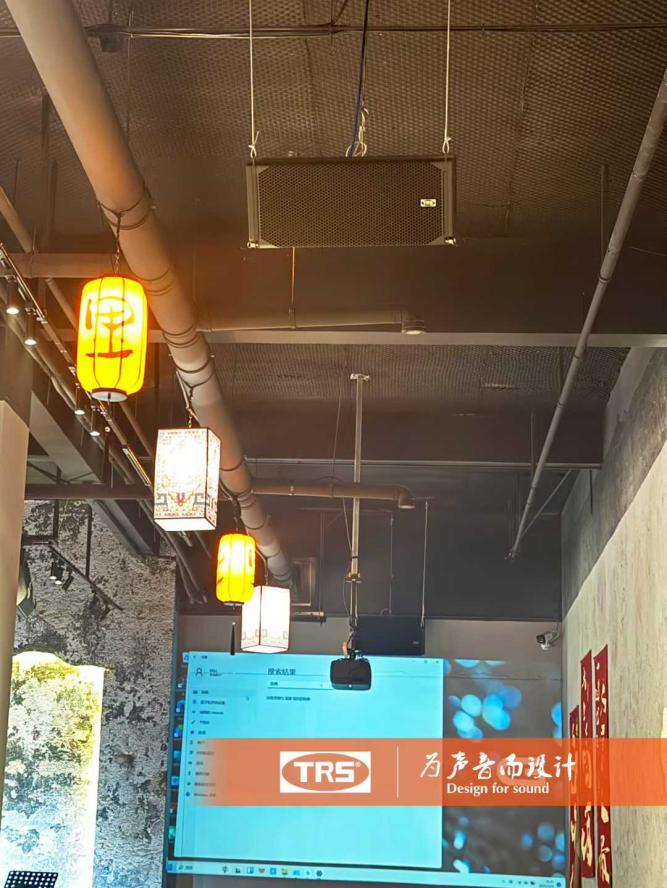
The processor in this system is like a clever voice guide. When the meeting starts, the system will automatically detect the environment of the meeting room – how much space there is, how many people there are, what material the walls are made of, and then automatically adjust the sound parameters. Rooms with a lot of glass need to reduce high-frequency reflections, while rooms with carpets need to enhance mid frequency performance. The power sequencer ensures that all audio equipment works synchronously to avoid sound distortion.
The combination of professional amplifiers and digital amplifiers makes the sound both powerful and energy-efficient. The main audio system is driven by a professional amplifier to ensure stable and powerful sound; The auxiliary audio system is driven by efficient digital amplifiers and is suitable for long-term use. This system is also very intelligent. When no one is speaking, the power will automatically decrease. As soon as someone speaks, it will immediately return to normal, ensuring both effectiveness and energy savings.
Conference microphones have also become smarter. The new digital conference microphone can accurately capture the speaker’s voice while filtering out background noise such as keyboard sounds and air conditioning sounds. When multiple people speak simultaneously, the system will automatically balance the volume of each microphone to ensure that everyone’s words can be heard clearly. The chairman’s microphone still has priority, and if necessary, the volume of other people’s microphones can be temporarily reduced to maintain order in the meeting.
The most convenient one is an intelligent audio mixer. The complex parameters that used to require professional debugging have now become simple scene patterns. When holding a small discussion meeting, use the “discussion mode”. When holding a general meeting, switch to the “conference mode”, and the system will automatically complete all professional settings. The staff can easily operate it through the touch screen, without the need for audio expertise.
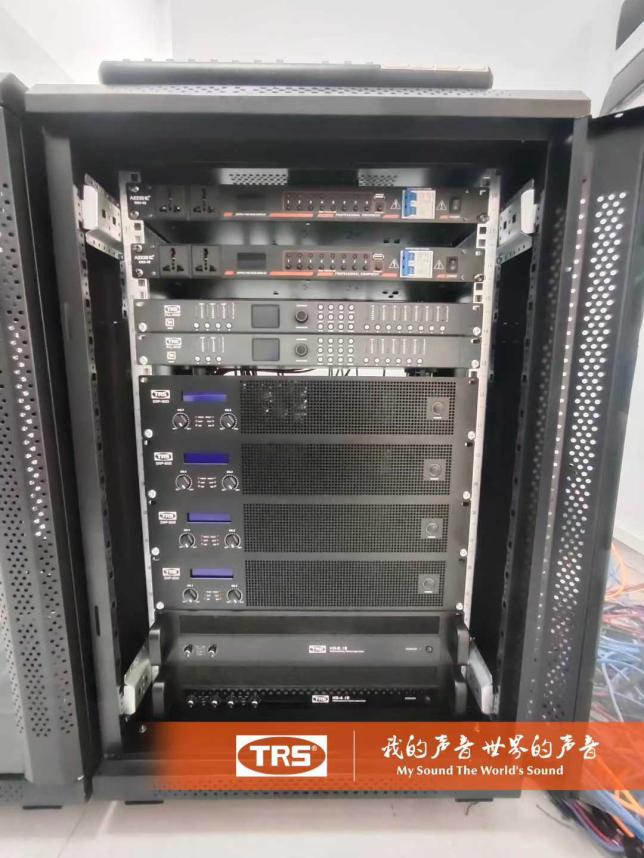
For larger conference rooms, the addition of subwoofer makes the sound more natural and full. Don’t think that a subwoofer is just for playing music – in meetings, it can make male speakers’ voices richer and more powerful, making the overall sound more balanced. More importantly, through careful setup, subwoofer can help reduce room resonance and make speech clearer.
The true value of this system lies in its adaptability. It can remember the acoustic characteristics of different conference rooms and quickly enter the optimal state every time it is used. Whether it’s a group discussion of ten people or a full staff meeting of a hundred people, whether it’s a bright meeting room by the window or a deep windowless space, the system can automatically adjust to the most suitable settings.
In summary, modern conference rooms require not only a sound emitting device, but also an intelligent audio system that can “understand” the space, “adapt” to needs, and “serve” people. Through precise placement of professional audio, intelligent analysis of processors, stable driving of amplifiers, precise synchronization of power sequencers, clear pickup of intelligent microphones, and convenient operation of audio mixer, every inch of space in the conference room can achieve clear and natural sound coverage. Investing in such a system is not only about upgrading equipment, but also about improving communication efficiency and team cohesion in the enterprise – making every word heard clearly and allowing everyone to truly participate in meetings.
Post time: Jan-09-2026