
Low-frequency performance defines the immersive feeling of any live event, cinema or commercial audio installation. Many project planners struggle to decide between a single subwoofer and dual subwoofer configuration, as wrong selection leads to uneven bass, overblown boom sound, or insufficient low-frequency pressure that ruins the whole listening experience. The core rule of thumb is simple: match your subwoofer quantity to venue dimensions, audience layout and performance requirements, rather than blindly chasing more hardware. TRS professional subwoofer deliver consistent low-frequency output, and paired with TRS audio processor and power amplifier, they enable flexible tuning for both compact rooms and large open spaces. A single high-quality subwoofer works perfectly for small and medium venues, such as small meeting rooms, private KTV booths and compact private cinemas with limited audience seating. In these confined spaces, one TRS subwoofer can generate clean, tight bass after careful placement and EQ adjustment. It requires simpler wiring, fewer power resources and easier system setup, reducing hardware cost and maintenance workload. When installed at the optimal position, it avoids excessive standing waves and provides enough low-frequency punch without creating strong bass peaks or dead zones. For venues with only one primary listening zone, a single subwoofer is a cost-effective and lightweight solution, especially for rental projects with tight installation time and budget limits.
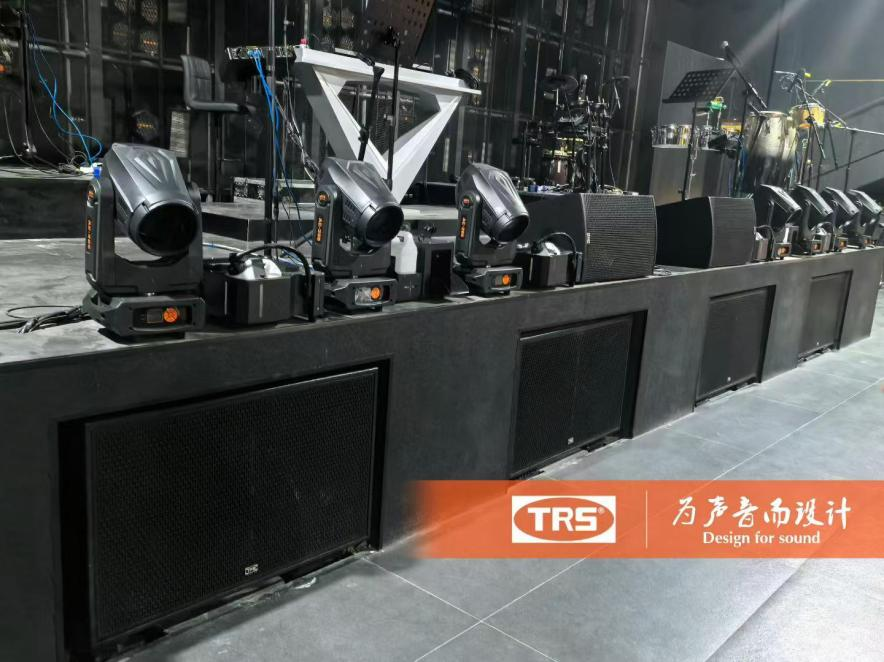
When the venue expands beyond small-scale spaces, the limitations of a single subwoofer gradually appear. Low-frequency sound waves reflect off walls, floors and ceilings, creating room modes. One subwoofer can only excite low-frequency resonance in fixed areas, which inevitably creates bass nulls where bass disappears completely and hot spots where bass sounds exaggerated and muddy. Even if you use a high-power single TRS subwoofer, it cannot eliminate uneven bass distribution across multiple audience zones. This issue becomes obvious in medium-to-large halls, banquet venues, outdoor stages and multi-seat private cinemas. Here is where dual subwoofer systems shine. Two matched TRS subwoofer arranged symmetrically can excite different room modes at the same time, counteracting partial standing wave interference and smoothing out bass peaks and dips across the whole audience area. More cone area moves greater air volume, raising overall sound pressure level and dynamic headroom. The dual setup delivers deeper, more impact bass with lower distortion at high volume, ideal for live music performances, EDM parties and movie playback that demands powerful low-frequency energy.
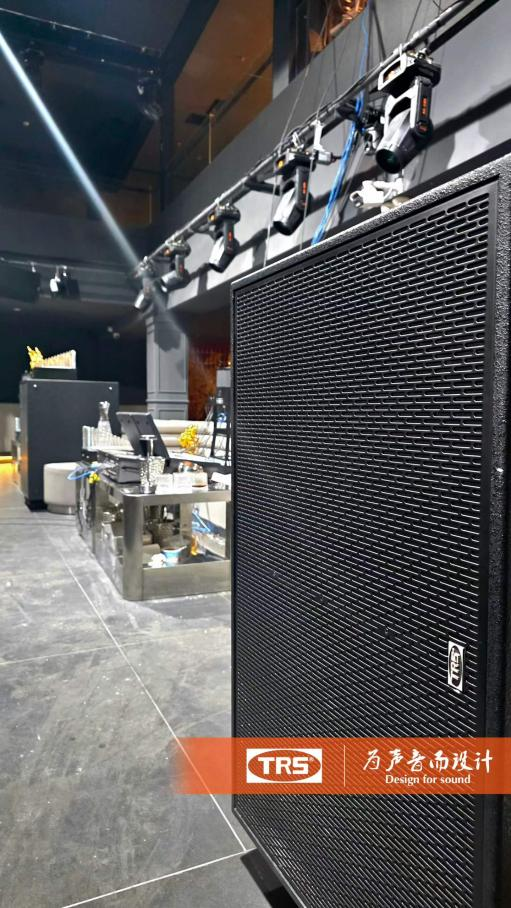
However, dual subwoofer systems are not a universal fix for every project. Improper placement will make bass worse than a single subwoofer. The two subwoofer must be phase-aligned and time-synchronized via TRS professional audio processor. The processor precisely controls crossover points, delay values and parametric EQ, ensuring the low-frequency waves merge coherently instead of canceling each other. Engineers need to measure the venue acoustic response before setting delay and phase parameters. For narrow and small rooms, adding a second subwoofer without acoustic assessment may trigger stronger resonance, resulting in boom and bloated bass that masks vocal details. That is why venue acoustic survey always comes before deciding single or dual subwoofer schemes.
System matching and power management are equally important for stable low-frequency reproduction. A single TRS subwoofer can be driven by one dedicated amplifier channel, while dual subwoofer configurations require matched power channels to maintain balanced output. Operators should use a power sequencer to follow standardized power-up sequence: turn on the mixer and TRS processor first, activate amplifiers afterwards, to protect subwoofer drivers from damaging current surges. This disciplined workflow prevents driver damage and keeps long-term system reliability, whether for fixed installation or mobile rental audio systems. Many engineers overlook this step, causing premature hardware failure and unstable bass output during events.
To summarize the practical selection logic: single TRS subwoofer systems are recommended for venues under 100 square meters with concentrated listening areas, simple acoustic environment and moderate bass requirements, including small KTV rooms, compact home cinemas and small multi-functional rooms. Dual TRS subwoofer systems suit venues larger than 100 square meters, wide audience coverage, live band performances and immersive cinema playback, such as banquet halls, medium-sized indoor stages and outdoor event sites. When the audience spreads across multiple zones, dual subwoofer deliver consistent bass for every listener seat and greatly reduce the risk of bass dead spots.
Choosing between single and dual subwoofer systems is a balance of venue size, acoustic condition, budget and application scenarios. TRS provides reliable subwoofer, amplifiers and audio processing equipment for both schemes. With correct layout, phase alignment and processor tuning, you can achieve clean, uniform low-frequency reproduction. Before designing your next audio project, evaluate the space dimension and acoustic characteristics carefully, select the proper subwoofer configuration, and build a high-performance low-frequency foundation for your sound system.
Post time: Oct-14-2026