
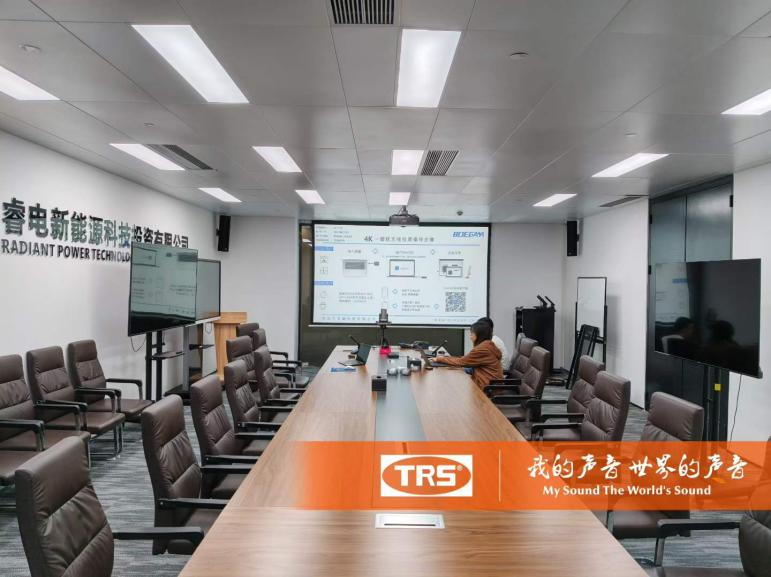
In the audio engineering of conference rooms, lecture halls and multi-function halls, most engineering contractors and government & enterprise purchasers share a common selection misconception: they firmly believe that conference column speakers with longer cabinets and more speaker units deliver better sound quality and superior sound coverage. However, numerous on-site cases have proven that blindly choosing overlong column speakers fails to improve conference sound quality. On the contrary, it easily causes harsh vocal sound, intensified indoor echo, uneven sound field, excessive volume in the front area and muffled sound in the rear seats. In fact, the core competitiveness of professional conference column speakers lies in precision beam control technology, rather than simply extending cabinet length and stacking units. Space adaptation, not oversized dimensions, is the core of correct selection. Only equipped with a complete TRS professional audio system can users achieve pure, stable and interference-free conference sound reinforcement performance.
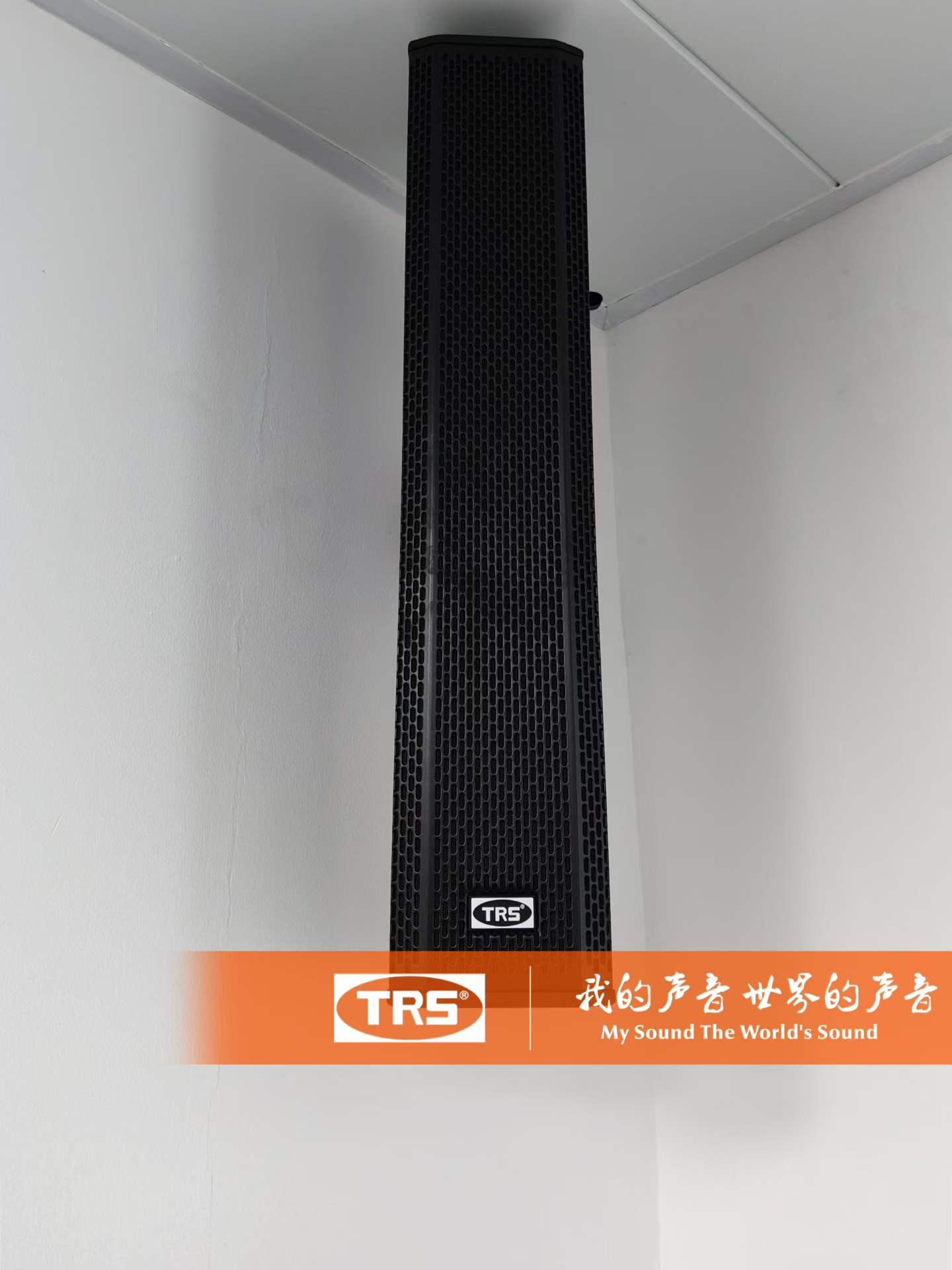
Most people lack professional acoustic knowledge and mistakenly regard the number of units as the determinant of sound quality. Featuring vertically arranged array units, conference column speakers form a directional narrow sound beam, which effectively restrains disordered sound reflection on ceilings, walls and floors and greatly reduces indoor reverberation. This is the key advantage that makes column speakers more suitable for conference scenarios than ordinary loudspeakers. Overlong column speakers feature an extremely narrow vertical sound beam with strong focusing performance, which is only applicable to large lecture halls and auditoriums with high floors and deep depth. When applied to small and medium-sized conference rooms and negotiation rooms with a floor height below 3 meters, the narrow sound beam will skip the audience’s ears and project directly onto walls and floors. This aggravates sound reflection, resulting in hollow, floating and echoed vocals, and seriously undermines the clarity of conference speeches.
In contrast, TRS conference column speakers tailored for small spaces adopt professional acoustic tuning with a wider and more uniform beam angle. They can accurately cover the entire seating area, effectively eliminate spatial reflected noise, and deliver clear, precise and intelligible human voices. TRS conference column speakers in different specifications are finely optimized in coverage angle, sound pressure level and frequency response, targeting small, medium and large conference scenarios respectively. They fundamentally avoid sound quality defects caused by improper model selection at the hardware level.
Apart from sound field adaptation flaws, overlong column speakers have many practical engineering drawbacks. Their heavy cabinets impose higher requirements on wall bearing capacity, mounting brackets and installation techniques, bringing potential safety hazards when installed in old conference rooms with insufficient wall load capacity. Meanwhile, overlong column speakers demand strict standards for installation height, pitch angle and symmetrical layout. Minor debugging deviations will greatly reduce sound field uniformity, causing uneven sounds distribution with silent areas and over-loud areas. In comparison, lightweight TRS conference column speakers feature simple installation and flexible debugging, compatible with most conventional conference room decoration conditions, and effectively reduce construction difficulties and later maintenance costs.
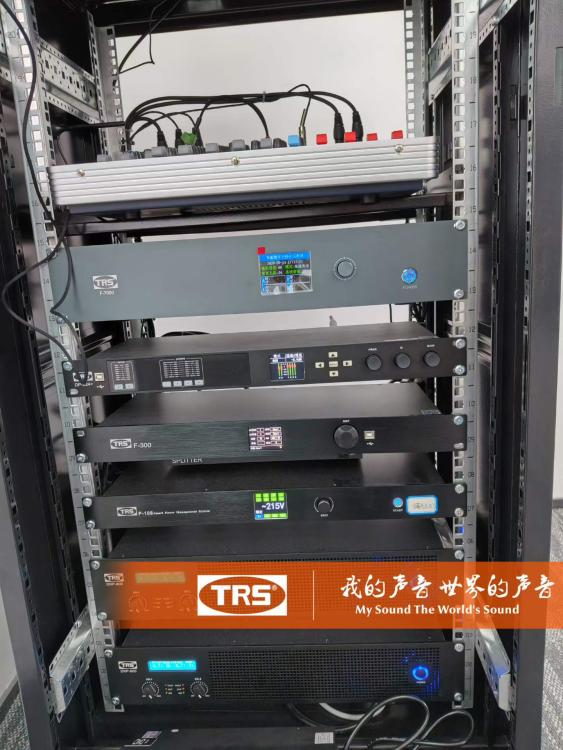
Excellent conference sound reinforcement relies on the coordination of the entire audio system, and speakers alone cannot achieve perfect sound performance. Many engineering projects only focus on the appearance and size of column speakers while ignoring supporting system configuration, resulting in underutilized device performance. Equipped with the TRS Professional Amplifier, conference column speakers can obtain stable, sufficient and pure power output, ensuring distortion-free and crackle-free vocal playback at any volume level. The TRS Professional Processor supports precise EQ tuning, noise reduction, delay adjustment and howling suppression, specifically optimizing conference room reverberation, filtering ambient background noise and delivering cleaner and clearer speech sound.
Clear sound pickup and stable sound reinforcement are the core demands of conference scenarios. The matched TRS Wireless Microphone realizes high-definition sound pickup and anti-interference signal transmission, effectively avoiding sound interruption, noise and frequency crosstalk during speeches. Combined with TRS conference column speakers, amplifiers and processors, it forms a complete TRS Audio System professional conference audio solution that comprehensively solves various pain points of conference sound reinforcement.
In conclusion, conference column speaker selection must abandon the “size supremacy” mindset. Cabinet length is only a carrier of acoustic design, not a criterion for sound quality. Professional engineering selection prioritizes matching speaker specifications according to room area, floor height, wall materials and spatial reverberation characteristics. Adopting mature beam-forming acoustic technology and covering full-size models, TRS full-series conference column speakers adapt to all types of conference engineering scenarios. Supported by a complete professional audio system, they help users avoid selection misunderstandings and build a high-definition, pure and stable professional conference sound reinforcement environment.
Post time: Sep-15-2026