
In the audio engineering debugging of live performances, outdoor cultural and tourism night shows, Livehouse commercial performances, and large lecture hall events, most sound engineers only rely on conventional EQ attenuation, gain reduction, and howling suppression. However, these methods cannot fundamentally solve hidden acoustic problems such as frequency resonance, phase deviation, auditory discontinuity, and low-frequency standing wave stacking. In a complete professional sound reinforcement system, phase consistency tuning of stage monitor speakers is an easily overlooked yet core debugging procedure, which directly determines signal-to-noise ratio, sound field uniformity, and vocal intelligibility. As the core near-field monitoring equipment for performers, stage monitor speakers with phase deviation will trigger abnormal acoustic feedback loops, modal resonance superposition, and time-domain misalignment. When coordinated with main Line Array Speaker, outdoor waterproof professional speakers, and subwoofer, multi-sound-source superposition easily causes hollow vocals, muddy accompaniments, and high-frequency self-excitation howling. Only with the complete TRS Audio System and optimized phase calibration, time-domain alignment and phase coupling can a howling-free and high-fidelity professional stage monitoring effect be achieved.
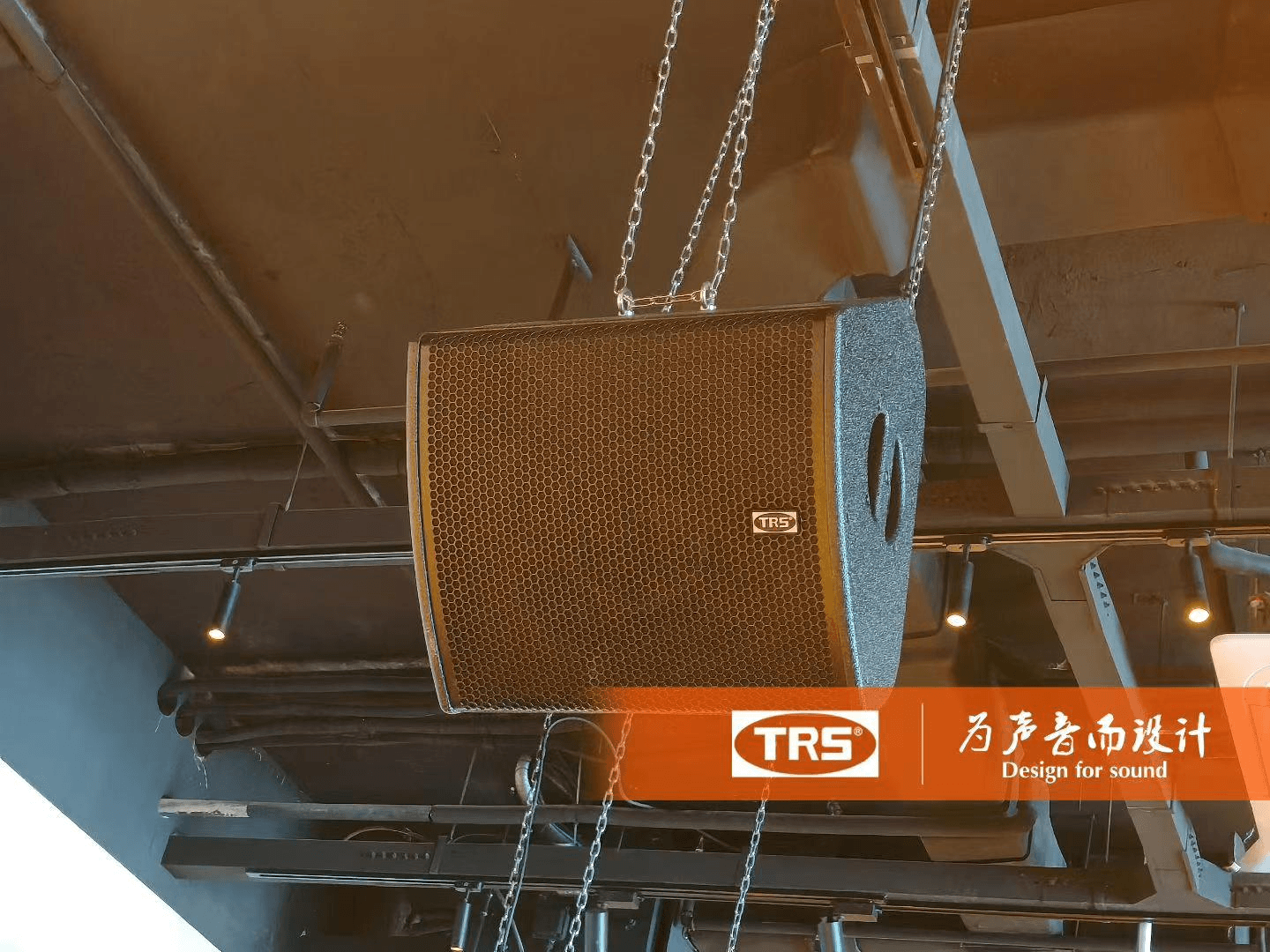
Stage audio features a typical multi-sound-source superimposed sound field, covering line array speakers, professional subwoofer, stage monitors speaker, original musical instrument sounds, and wireless microphone pickup devices. Some outdoor mobile performances and scenic real-world shows are also equipped with all-weather waterproof speakers for auxiliary sound reinforcement. Different sound sources have distinct propagation distances and sound speed delays, easily leading to four core problems: phase difference, waveform cancellation, waveform superposition and phase distortion. Meanwhile, on-site acoustic reverberation, spatial standing waves and ambient noise will further amplify acoustic defects. Phase offset causes empty monitoring frequency bands and collapsed mid-range vocals; phase superposition generates positive feedback self-excitation, which explains why most stages sound clear at low volume but howl at high volume. Simply adjusting gain and cutting frequency bands cannot solve the problem fundamentally, which is similar to the acoustic logic of conference column speakers that adopts beam control to avoid echoes and optimize vocal clarity.
Ordinary monitor speakers on the market suffer from poor unit phase linearity and asymmetric cabinet structure, resulting in severe phase fluctuation and inherent monitoring distortion, making them unable to adapt to large-scale performances and complex outdoor scenarios. In contrast, TRS stage monitor speakers adopt a symmetric precision acoustic cavity design with excellent transient phase response and flat phase output, ensuring hardware-level phase consistency. They are fully applicable to indoor lecture halls, outdoor cultural and tourism real-scene performances, open-air commercial shows, and small Livehouse venues. Different from ordinary speakers, TRS stage monitors achieve perfect acoustic matching with outdoor line array speakers and waterproof subwoofer, avoiding debugging difficulties caused by inherent hardware phase deviation and greatly reducing on-site acoustic rectification costs.
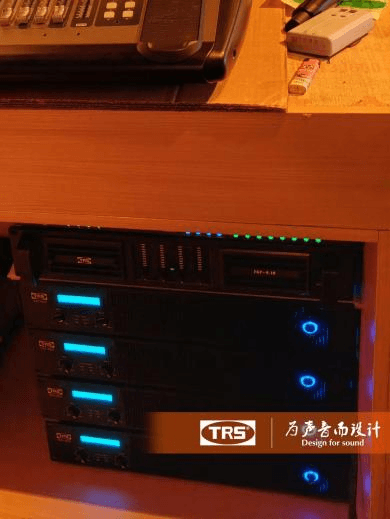
Professional phase tuning consists of two core procedures: hardware calibration and system fine-tuning. The hardware phase primarily completes wiring polarity verification to eliminate hidden hardware anti-phase risks. In engineering construction, reversed positive and negative speaker wiring or disordered channel polarity directly causes sound field cancellation, resulting in missing mid-frequency, weak low-frequency response and sound field discontinuity, which seriously damages sound field uniformity. Supported by the intelligent channel detection function of TRS Professional Amplifier, engineers can quickly check the polarity of each monitor channel, strictly control the phase synchronization of multiple monitor speakers, and verify the impedance matching state of the entire system. This avoids waveform distortion and equipment overload caused by impedance imbalance, ensuring the coordinated and interference-free operation of multiple sound sources.
The system fine-tuning relies on the TRS Professional Processor for high-level calibration, which serves as the core technical advantage of professional sound engineers. By accurately adjusting time-domain delay compensation, channel phase flipping and band phase coupling, the time and phase differences of multiple sound sources are corrected, realizing synchronous temporal and spatial superposition of line array main speakers, waterproof supplementary speakers, subwoofer and stage monitors. Aiming at the strong reverberation and reflection problems of hard-stage and open outdoor venues, segmented phase correction can destroy the resonance conditions of acoustic feedback. Combined with noise reduction optimization to improve the overall signal-to-noise ratio, this method completely eliminates self-excitation risks while retaining original sound details without sound quality loss, which is superior to traditional simple frequency cutting and noise reduction.
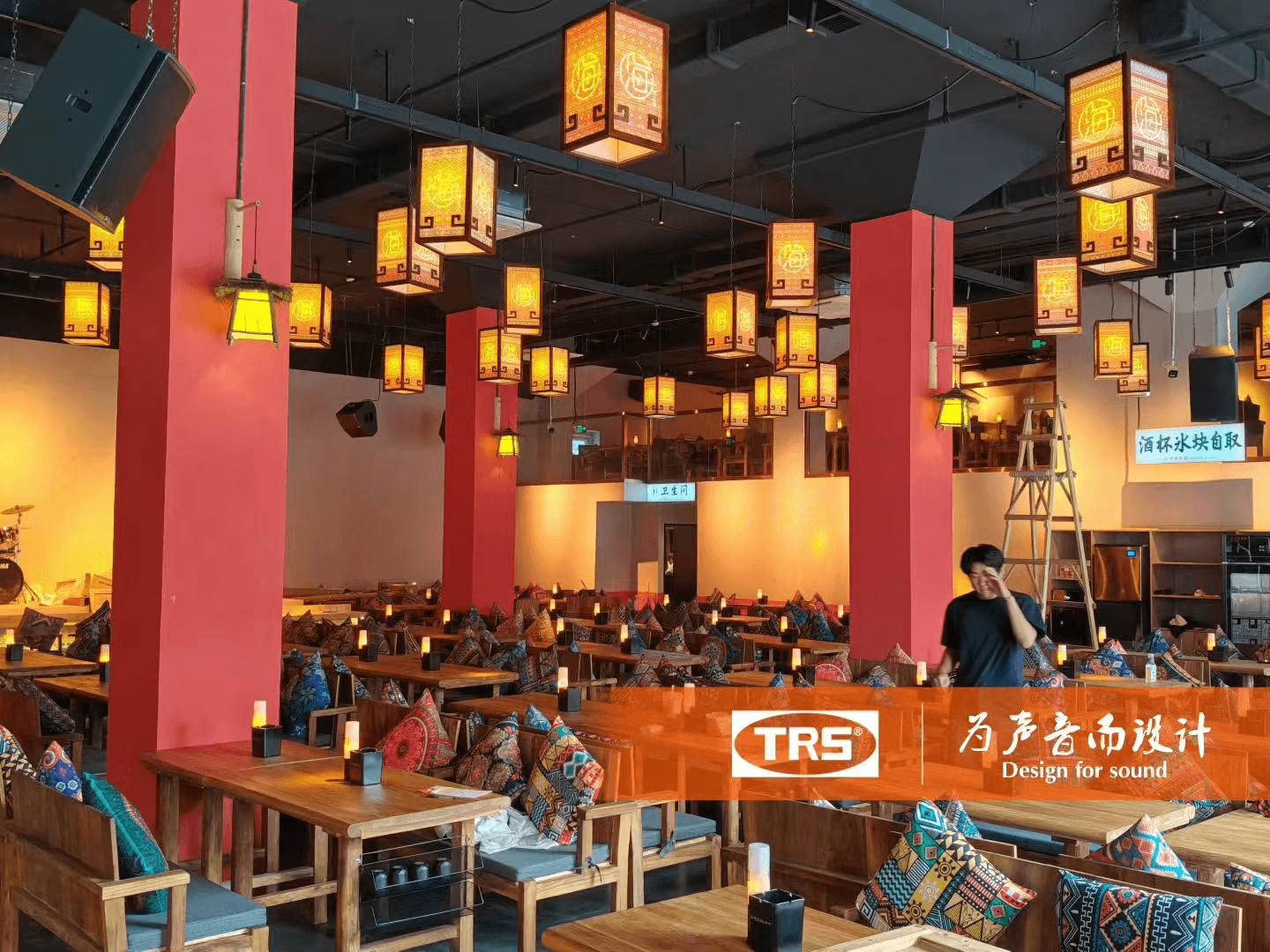
A common industry debugging misconception is over-reliance on EQ cutting to suppress howling while ignoring phase alignment and waveform optimization. Excessive frequency cutting destroys the phase linearity of audio signals and triggers sound image dislocation, resulting in perfect sound quality for the audience but abnormal monitoring sound on stage. The core professional debugging logic is consistent with the space adaptation priority selection principle of conference column speakers. It takes sound field adaptation and phase alignment as the core and EQ fine-tuning as the auxiliary means to ensure audio waveform integrity and phase fidelity. Meanwhile, reverberation parameters are optimized according to on-site acoustic conditions to balance spatial acoustic characteristics, realizing highly unified sound perception between stage monitoring and audience main sound fields and eliminating auditory discontinuity.
The entire system debugging needs full-link calibration with TRS Wireless Microphone to simulate real singing sound pressure and pickup angles, lock the critical stable gain point of the stage, and raise the sound reinforcement limit without compressing sound quality. Combined with TRS subwoofer for low-frequency phase coupling, it effectively eliminates low-frequency standing wave disorder caused by stage ground reflection and optimizes low-frequency depth and compactness. In addition, the TRS Power Sequencer standardizes equipment startup and shutdown procedures, avoiding phase fluctuation and equipment loss caused by outdoor voltage fluctuation and instantaneous equipment switching, ensuring the long-term stable operation of the entire outdoor and stage sound reinforcement system.
Post time: Sep-15-2026